Mural vs. Graffiti vs. Street Art: A Clear Comparison for Newcomers
A painted wall can be three different things at once, and the word you choose says more about intent than about the picture. Someone passing a five-storey figure painted with rollers will call it a mural. The person who painted it may call it a commission. The photographer framing it may tag it as street art, and the neighbour who dislikes it may call it graffiti. Nobody is being sloppy; the words overlap because the practices do. Still, the differences are real, and they come down to permission, purpose, materials, and how long the work is meant to survive.
Start With Intent, Not Aesthetics
Style is the least reliable way to sort these terms. Graffiti can be wildly figurative. Murals can be nothing but enormous letters spelling a shop name. Street art can be a stencilled rat the size of a dinner plate, a mosaic tile on a bridge pier, or a knitted sleeve wrapped around a bike rack. Judge by appearance and you will contradict yourself within a week.
Three questions do most of the work:
- Permission. Was the wall offered, commissioned, rented, tolerated, or taken overnight?
- Purpose. Was the work made for a client, for a neighbourhood, for a political message, or for other writers?
- Lifespan. Is it meant to survive a decade, a season, or only until someone else needs the space?
Answer those and the label usually suggests itself. What follows is mostly about the cases where it doesn't.
Graffiti: Names, Speed, and Repetition
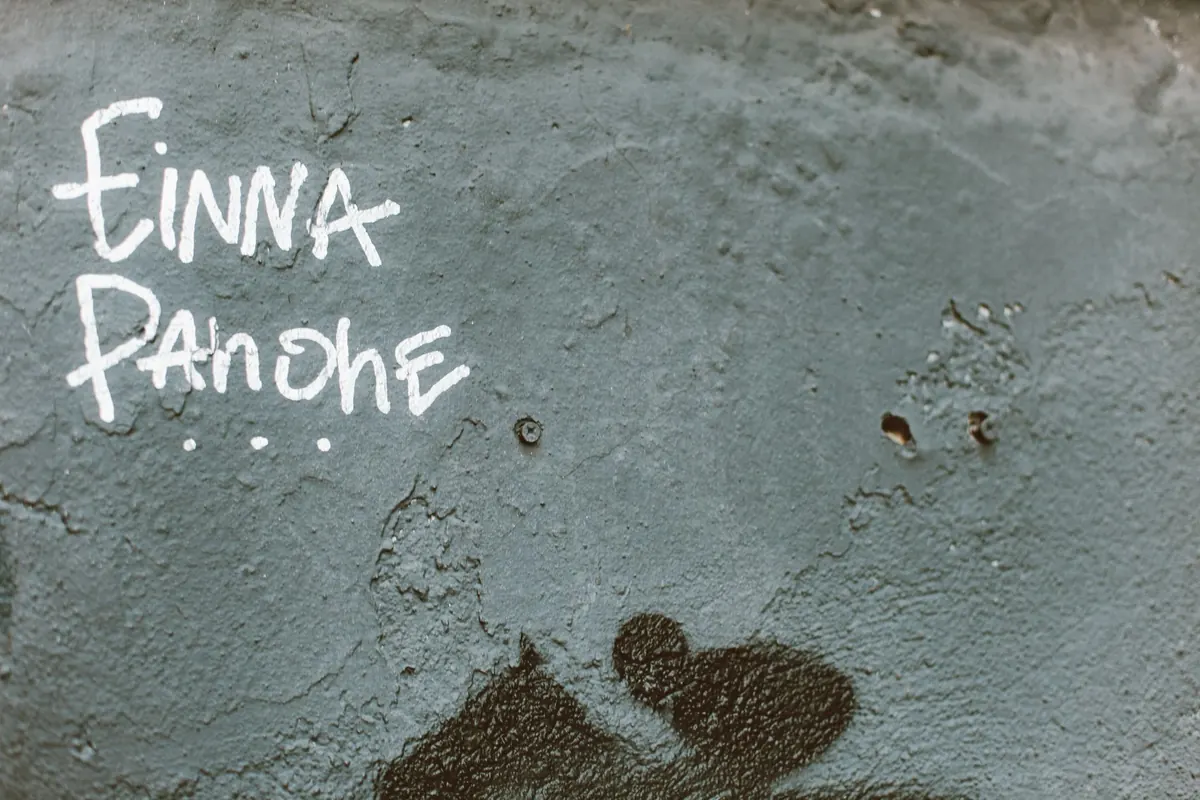
Graffiti, in the sense its practitioners use, is writing. Letters and names, not pictures. A tag is a signature applied in seconds with a marker or a thin spray line. A throw-up is quick bubble lettering in two colours, made to be read at speed from a train window. A piece is the larger, planned version: outlines, fills, background, a whole composition built around a name. The culture grew up around repetition — the same word appearing across a city in different hands, sizes and styles, until the name itself becomes the artwork.
Because speed and placement matter more than durability, graffiti leans on aerosol cans, markers, mop-style drippers and the occasional fire extinguisher. Most of it is made without permission, which is why the word carries a legal shadow in news reporting. But permission walls, legal halls and mural festivals exist, and plenty of respected writers have spent decades painting with the owner's blessing.
In Italian, graffiti generally refers to this lettering tradition, while murales is the everyday word for a large painted wall. That split alone explains a good deal of the confusion on Italian-language websites.
Murals: Scale, Commission, and Permanence
A mural is a painting made for a wall, usually with the owner's agreement, and usually meant to stay. The scale is architectural: the building decides the composition, and windows, pipes, shutters and cracks get worked into the design rather than hidden. The process is planned across days or weeks — sketches, a scaled grid or a projected outline, primer and base coats, then brushes, rollers and spray for gradients and detail. A clear protective coat is common on walls that face heavy sun or road traffic.
Authorship is central. Murals are signed, credited, documented, sometimes insured. A school, a housing association or a business commissions the work, and the artist answers to a brief as well as to the street. The tradition is old and international, from religious wall painting to the Mexican muralists Diego Rivera, José Clemente Orozco and David Alfaro Siqueiros, whose public walls were explicitly political.
Two useful boundaries: a mural does not have to be outdoors — plenty hang inside buildings — and not every large outdoor painting qualifies. A billboard selling something is advertising, however well painted.
Street Art: the Loose Umbrella
Street art is the widest of the three terms and behaves like a category rather than a craft. It came into broad use in the 2000s to describe work made in public space that wasn't primarily lettering: stencils, wheatpaste posters, stickers, ceramic tiles, yarn, painted walls, small installations, projections after dark.
The work is often self-initiated, but not always — festivals, museums and brands commission it too. What holds the category together is the audience. Street art usually wants to be understood by anyone walking past, without knowing the codes of a subculture. It borrows images from advertising, comics, politics and art history, and places them where a crowd will meet them uninvited.
The overlaps are constant. Many street artists came out of graffiti and still write. Banksy's stencilled walls and Keith Haring's chalk drawings in New York subway stations are usually filed under street art, though both sit comfortably inside a looser definition of graffiti.
Materials, Setting, and Audience at a Glance
- Graffiti: aerosol, markers, mops; fast execution; often temporary; frequently unauthorised; made for peers first.
- Mural: brushes, rollers and spray over prepared walls; weeks on site; intended permanence; usually commissioned; made for passers-by, the client, and the record.
- Street art: paper, paste, stencils, tile, fabric, light; deliberately variable lifespan; permission status all over the map; made for a general public.
Lifespan is the quiet dividing line. Graffiti and much street art accept disappearance as part of the deal — painted over, weathered, scrubbed off by a council crew. Murals are planned against that fate, with maintenance budgets and restoration conversations. When a painted wall gets protected, documented and repaired, it has usually crossed into mural territory, whatever it started as.
Where the Overlaps Actually Happen
The legal wall
A hall of fame or a permission wall is full of graffiti — lettering, names, styles — produced entirely with consent. It is still graffiti. Permission changes the legal status, not the form.
The self-initiated big painting
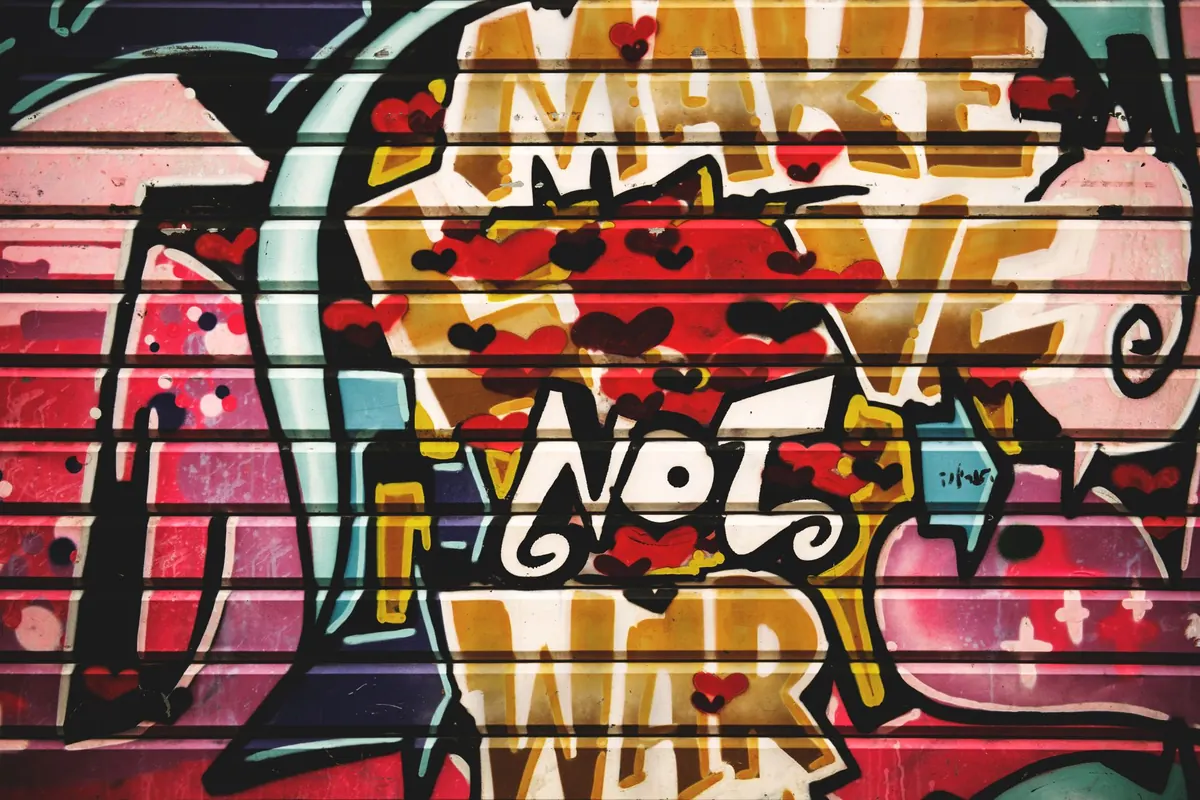
A single artist paints a huge figurative scene on a wall nobody asked them to touch. It looks like a mural and is often described as one, but the lack of a commission and the likelihood of removal pull it toward street art. Many writers call these "street art murals" and let the argument run.
The tag on the finished mural
Fresh tags appearing across a commissioned mural are the clearest illustration of the difference: two practices, two intentions, one surface. The mural wants to stay; the tag accepts that it won't.
How to Describe a Work Without Getting It Wrong
If you are writing a caption, a social post or a neighbourhood guide, a few habits will keep you accurate.
- Describe before you label. "Two-storey painted figure on a shuttered garage, unsigned" tells a reader more than a contested noun.
- Use street art as the umbrella when you are unsure. It is broad enough to be safe and specific enough to be useful.
- Call lettering graffiti, and say whether it appears to be permitted only if you actually know.
- Reserve mural for the planned, large, normally commissioned wall painting — and credit the artist if the name is visible or documented.
- Note location and date. Walls change fast; a date turns a photo into a record.
One last note: rules on painting walls, and on photographing them for commercial use, differ from city to city and depend on who owns the surface. If a project or publication depends on it, check with the property owner or the local authority rather than assuming — this guide is about vocabulary, not legal advice.
Photo: Tim Mossholder / Pexels