What a Mural Removal Reveals About Neighborhood Change
The first thing you notice is not the missing image but the quiet. A wall that used to give your eye something to do — a face, a bird, a sentence in a language you half understood — becomes a rectangle of flat grey, and the street feels narrower. Nobody holds a press conference to announce that the whale is gone. Yet the disappearance of paint from a wall often says more about where a neighbourhood is heading than any planning notice: who owns the surface, who gets to speak on it, and who is expected to leave next.
"Buff" Is a Verb, and It Takes an Afternoon
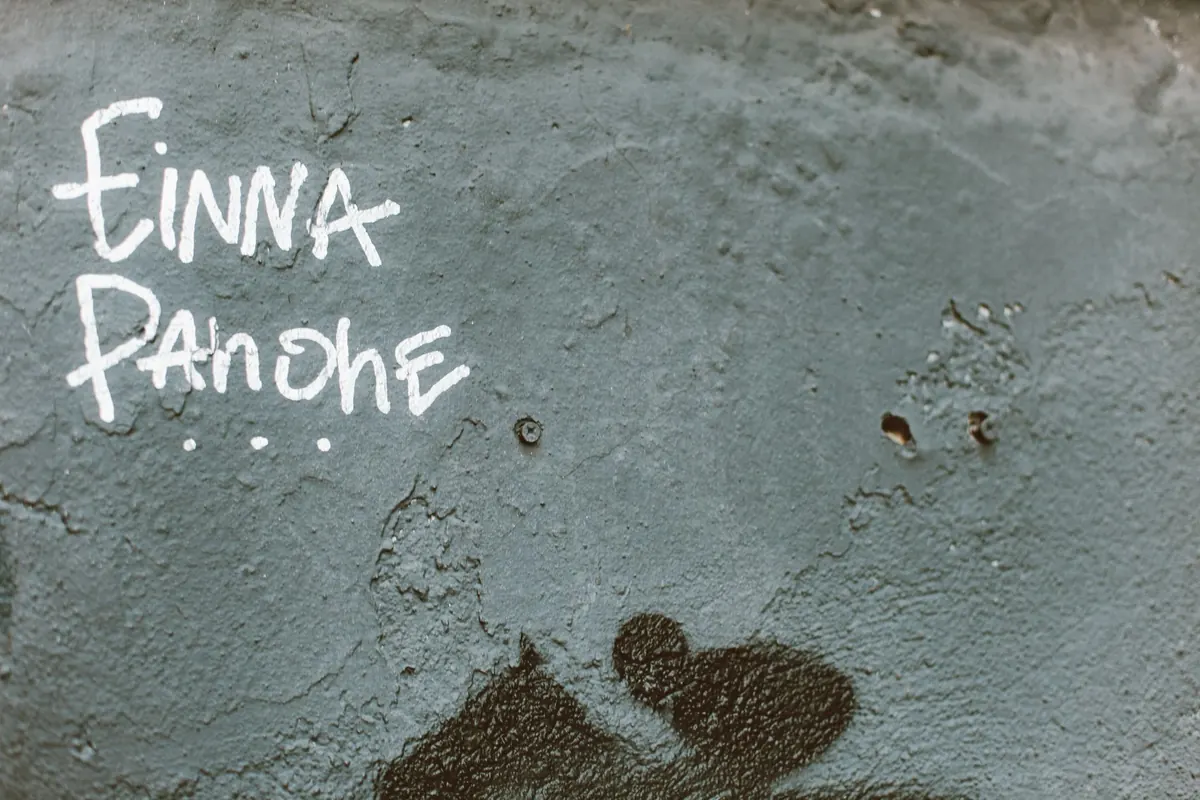
In the street art and graffiti world, to buff a wall means to paint it out — flat, uniform, deliberately unreadable. The word sounds industrial because the act is. A roller, a tin of primer, a ladder, a warm morning. By lunchtime, a decade of a wall's life is a slightly different shade of grey from the one next door, and that mismatched rectangle is the only evidence left.
On a hot day you can sometimes see the ghost: one coat is not always enough, and the outline of a jaw or a wing comes back through the paint like a watermark. Two streets over, someone has already started a new piece. The wall is not grieving. Only the people walking past it are.
The reasons behind a buff are usually mundane. A building changes hands and the new owner wants a clean façade. A lease includes a repaint clause nobody read. A tenant complains. A mural fades, cracks, or starts to look, to its own artist, like something from another life. Sometimes the removal is a repair. Not every disappearance is an erasure, and treating every buff as a tragedy is its own kind of blindness. The interesting question is not whether the paint came off, but what replaced it — and how quickly.
A Wall Is an Archive Nobody Catalogued
Look closely at an old mural wall before it is buffed and you will find a stack. A tag from years ago, half-covered by a wheatpaste, half-covered by a commissioned piece that everyone agrees is the "real" mural. The layers are dates. They record who was here, what was tolerated, what got permission, and what got painted over by someone with a ladder and no interest in asking.
Buffing flattens that stack into a single grey page. The image goes, but so does the sequence — the evidence of a wall that was argued over, used and reused. Photographs of the finished piece rarely capture it, because most people photograph the front of a wall, at eye level, on a bright day, and never the corners where the layers show.
Who Actually Owns the Surface?
Here is the uncomfortable fact that every mural carries: the image may belong to the artist, but the wall belongs to someone else. A mural on private property lives on borrowed time, whatever the affection around it. In most places the owner can paint over it, and in most places they will, eventually.
That asymmetry shapes everything. A commissioned mural is a negotiation with a duration attached — a season, a year, until the next renovation. An unsanctioned piece is a negotiation with luck. When a wall goes grey, the neighbourhood is not just losing a picture; it is being shown, in public, where the decision-making sits. Often the people who walked past that wall every day were never part of the conversation and find out at the same time as everyone else: by looking.
When the Mural Becomes the Sales Pitch
The strangest chapter in this story is the one where street art becomes an amenity. Renderings for new buildings borrow the language of creativity. Hoardings get a coat of spray paint so the site looks alive while it is torn apart. A mural appears in the marketing photographs for flats that will cost more than the building it decorates ever did.
This is where the removal starts to look less like bad luck and more like a pattern. The wall helps make an area feel safe, interesting, worth investing in. Once the investment arrives, the wall is in the way — too specific, too attached to the people who were there before. It is not a conspiracy so much as an appetite. Colour attracts attention; attention attracts money; money prefers a clean surface.
What Goes Missing Is Not Only the Image
Murals do unglamorous work that nobody credits them for. They are wayfinding: turn left at the whale, we're the door after the whale. They are meeting points, backdrops for first-day-of-school photographs, the thing you describe when you give directions to a stranger. Remove one and you do not just lose art. You lose a landmark, and the small daily navigations built around it.
They also hold stories that were never written down — who the painted face was, which grandmother sat for the sketch, which group of teenagers got permission to paint the shutters one summer. When the wall goes grey, those stories lose their anchor. They survive only if someone bothered to write them down, which is why the most useful thing anyone can do around a mural is not defend it forever, but record it properly while it is still there.
Signals to Read Before the Scaffolding Arrives
Removals are rarely announced, but they are usually preceded by small changes. Once you start noticing these, you will see them coming weeks ahead:
- The mismatched coat. A single wall painted a shade that matches nothing around it, often with the roller marks still visible at the edges.
- Scaffolding with no obvious job. Survey work, a condition report, a quiet inspection before a decision is made.
- The mural in a rendering. Check the hoarding and the planning notices. If your wall appears as an illustration of the future, it is being spent.
- Fresh hardware. New lighting, bollards, planters or a bin placed in front of the piece. A mural that has become inconvenient gets crowded out before it is painted out.
- New interest in "maintenance". Sudden tidying of a façade often precedes a change of use rather than a restoration.
- The artist speaks first. Many painters announce the end of a piece themselves. Follow the people whose work you like; they usually know before the street does.
What to Do When the Rollers Come Out
You cannot save every wall, and arguing that nothing should ever change is not a position that survives contact with a city. But you can make sure a removal leaves a record rather than a blank.
- Photograph it with context. One shot of the whole wall, one of the street so the location is unmistakable, one detail close enough to read the brushwork. Note the date and the nearest cross streets in the file name or a caption.
- Get the name and the year. A photograph becomes a document the moment you can say who painted it and when. Ask the artist, the shopkeeper, the person walking their dog.
- Write two sentences of story. Why it mattered, who met there, what it replaced. This is the part that vanishes fastest.
- Ask politely what is planned. Owners, caretakers and council offices answer specific, civil questions more often than people expect. You are not demanding; you are asking to be told.
- Choose your fights. Prioritise walls that were painted with agreement and are being removed without warning. Those are the cases where public pressure and conversation actually have somewhere to land.
- Help the next wall happen. Offer a scaffold, donate paint, introduce an artist to a willing owner. The most reliable answer to a blank wall is another painted one.
If a wall is on private property, the decision is usually the owner's, and it is worth checking your local rules before you build a campaign on a legal argument. The stronger argument is almost always civic: this wall was part of how people found their way around here, and changing it in silence costs something. Say that plainly, keep your photographs, and remember that a city's memory is mostly kept by the people who bother to write it down.
Photo: HeiKiwi / Pixabay