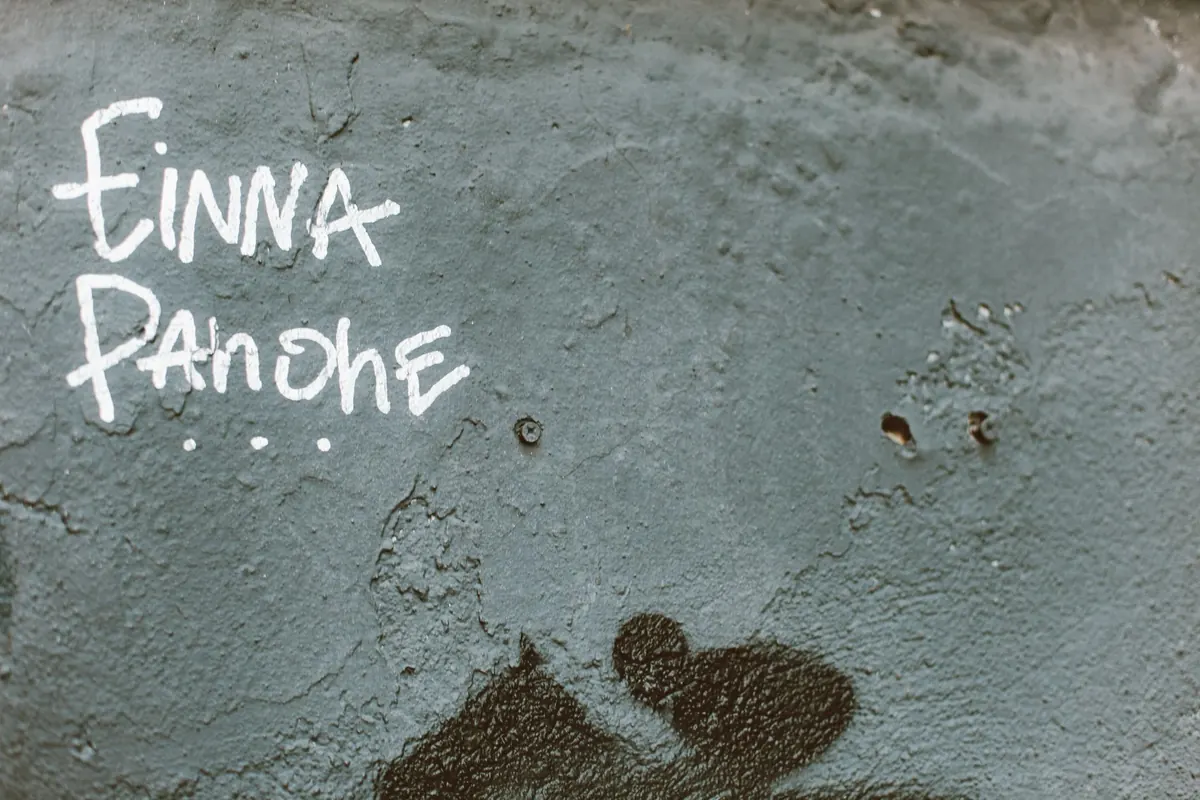
How to Identify an Artist's Signature on a Mural: A Field Guide
You spot a mural from the bus, get off at the next stop, and walk back. Three stories of painted swallows, a kid on a bike, a wall of impossible blue. It is signed, you are almost sure — there was a small pale mark in the bottom corner. You kneel on the pavement, phone flashlight on, and find four letters and a year, half worn away. Or you find nothing at all, and someone on the internet tells you it is by an artist who has never set foot in that city. Getting the credit right takes about five minutes of looking and a little patience. Here is how to do it properly.
Start Low, Then Work Every Edge
Most signatures sit in the bottom quarter of a wall, either left or right of the center, roughly at the height where a standing painter's arm naturally finishes. Get close. Get low. The mark is often smaller than a credit card and painted in a color that pulls it into the background, so a photo taken from eye level at ten paces will not show it.
Then widen your search along the edges. Check the narrow strip where the wall meets the pavement, the plinth or dado if the building has one, the inside return of a corner, the sliver beside a downpipe or drain. If the mural stops where a shutter, door, or window begins, look on both sides of that interruption — painters often reserve a discreet panel there rather than break the composition. Look up, too: some artists sign at the top edge where the ladder ends, and a few sign the ceiling of a passage. On walls with a painted border or frame, read the frame itself; it is a favorite hiding place.
The Name Is Often Inside the Picture
Many muralists dislike the look of a signature floating on bare plaster, so they sew it into the scene. Run your eyes over the painted objects: the sole of a sneaker, a jacket patch, a spray can on the ground, a cereal box, a book spine, a street sign, a fake advertisement, a tattoo on a painted forearm. One common device is the invented brand — the artist paints a shopfront or product with a logo that is actually their monogram.
Look at patterns, too. A fabric print, a tiled floor, or a row of bricks may contain a repeated letter shape. Check the negative space between figures, and the shadows under a painted ledge. On large production walls, walk the whole length before deciding there is no credit: the signature is sometimes placed where the artist's section ends, not where the wall ends.
Signature, Tag, Crew Mark, or Credit Line?
Not every mark on a mural belongs to the person who painted it. Before you attach a name to a wall, work out which kind of mark you are reading.
- A signature is usually painted in the same session, with the same paint, and sits inside or deliberately alongside the composition. It may include a year.
- A tag is often added later, in a different medium — a marker, or spray from a can with a visibly different cap. It cuts across the finished work, sits on top of faces and hands, and usually ignores the composition.
- A crew mark or roll call lists initials rather than one name. A wall can carry several, especially where artists shared the scaffold.
- A credit line is different again: an assistant's name, a festival plaque, a curator's sticker, or "with help from" in small letters near the edge.
One trap worth naming: a tribute wall. A portrait of a well-known artist, painted by somebody else, may carry the subject's name in huge letters and the painter's name in tiny ones. Read the small one.
Use Light and a Camera the Way a Conservator Would
Thin paint, incised lines, and faded marks show up best in raking light — early morning or late afternoon, when the sun skims the wall. If the surface is wet, wait; water darkens pale paint and hides it. Some colors only separate from the background at an angle, so move two steps left and look again.
Photograph the mark straight on, filling the frame, then step back for a wide shot of the whole wall. You want both, because the close-up proves what the letters say and the wide shot proves where they are. Zoom into the close-up on your phone rather than trusting your eyes at arm's length. Do all of this from the ground. Do not climb railings, ledges, or bins for a better angle, and never scratch or wipe a surface to read it — you will damage the paint and learn nothing.
Verify With Three Independent Sources
A mark on a wall is evidence, not proof. Confirm it before you publish, post, or print it on a label.
- The artist's own channels. Check their website and portfolio for the same image with a location. Many painters post a finished wall with the street or district named.
- Whoever commissioned the wall. Festival archives, the building's owner, a local cultural association, or the curator of a project usually keep an artist list with wall addresses.
- People who document the neighborhood. Street art photographers, walking-tour guides, and local archive groups often know which wall changed hands and when.
A reverse image search can help you find earlier photographs of the same wall, including a shot of the artist at work. Be careful with aggregator sites and image boards: a wrong credit copied five times is still one unverified claim. If your sources disagree, write "attributed to" and describe the mark you actually saw. That is honest, and it is more useful than a confident guess.
Pseudonyms, Handles, and Artists With Several Names
Plenty of muralists work under a name that is not on their passport, and some have changed names mid-career, so an early wall and a recent one may be signed differently. Duos sign with two names or a joined monogram. A painted handle is an invitation to look the artist up, but check whose handle it is — sometimes the account belongs to the festival or the building rather than the painter. And remember that the person signing may be the assistant who mixed the paint and blocked in the sky, not the name on the poster.
A Five-Minute Routine That Saves You From Wrong Credits
Crouch and read the bottom edge. Walk the full length of the wall at waist height, then look inside the picture. Photograph the mark close and the wall wide. Decide whether it is a signature, a tag, a crew mark, or a credit line. Then check the artist's own feed, the commissioner, and one local source before you write a name. If all three agree, credit with confidence. If not, describe the mark, note the street and the date, and leave the attribution open — the next person to visit will thank you for the careful start.
Photo: ROMAN ODINTSOV / Pexels